
Your annual report deserves more than to sit on a shelf
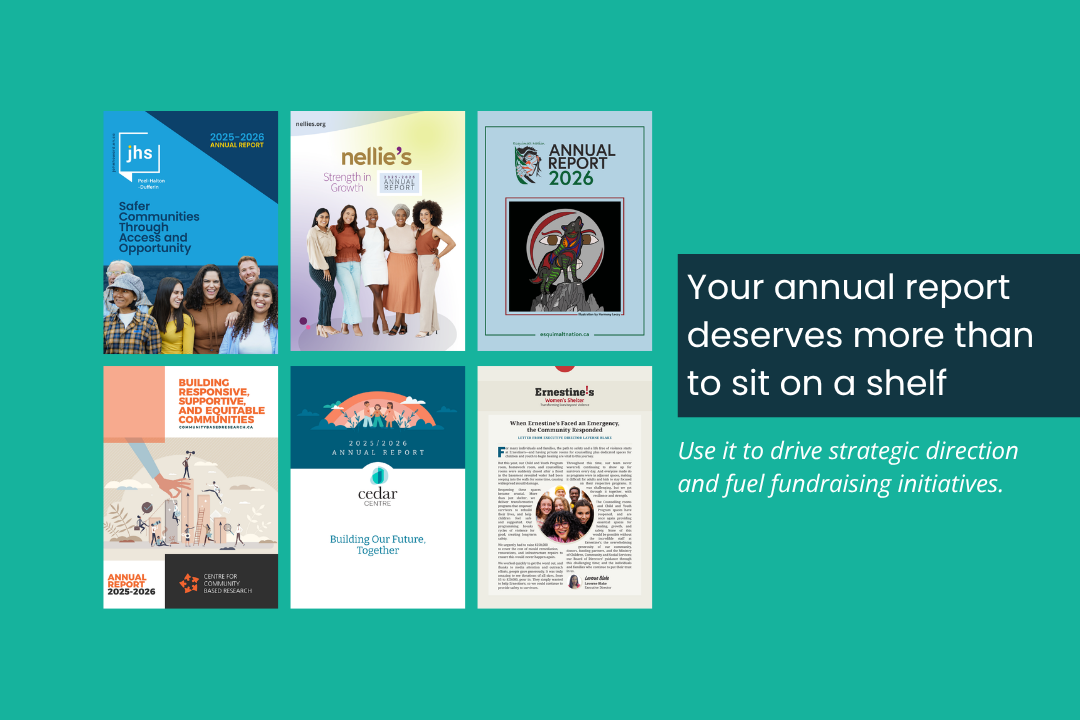
How many months did it take you to produce your annual report? Two? Three? And now that it’s finished, what are you doing with it?
Most non-profits view their annual report as a one-and-done piece. It’s a report to donors and after an initial fanfare release, it often lives as a link buried in the About Us section of the website.
But all that work, and all that impact showcased, deserves so much more than being forgotten about until it’s replaced by the next report. A well-written, donor-centric, and engaging annual report can boost fundraising, act as a tone-setter for your communications, and shape messaging for the year ahead. It’s a valuable tool that can be used to cultivate relationships with donors, volunteers, staff, and funders all year long.
Remember, your annual report is not about what you accomplished, it’s about the impact you made.
This blog has ideas on how to think of your annual report as your marketing calendar’s secret weapon by extracting, reshaping, and repackaging the different pieces to yield months of content.
Now, here are a few ideas for using it internally to drive strategic direction and fuel fundraising initiatives.
Share it with major donors. Impact stories and proof points showcase how you moved the needle. This opens the door for a one-on-one conversation with key supporters about the difference you made in the last year, your vision for the upcoming year, and how their support can be a part of it.
Use it for segmented pitching in grant applications or corporate sponsor packages. Rather than sending the compete document and asking the recipient to decide what’s relevant, pull-out specific program outcomes and client success stories to craft targeted pitches.
Empower your board. Board members are often your biggest champions. An impactful annual report gives them a clear, accessible snapshot of what the numbers actually mean so they can confidently advocate within their own network.
Inform strategic planning. Everything you need is in one place so use it as a base to determine organizational priorities. The benchmarks also help you track your progress toward the milestones in a current strategic plan.
Onboard new staff or board members. As a clear, digestible snapshot of your impact, it’s a useful tool for new hires or board members to understand their role in the bigger picture.